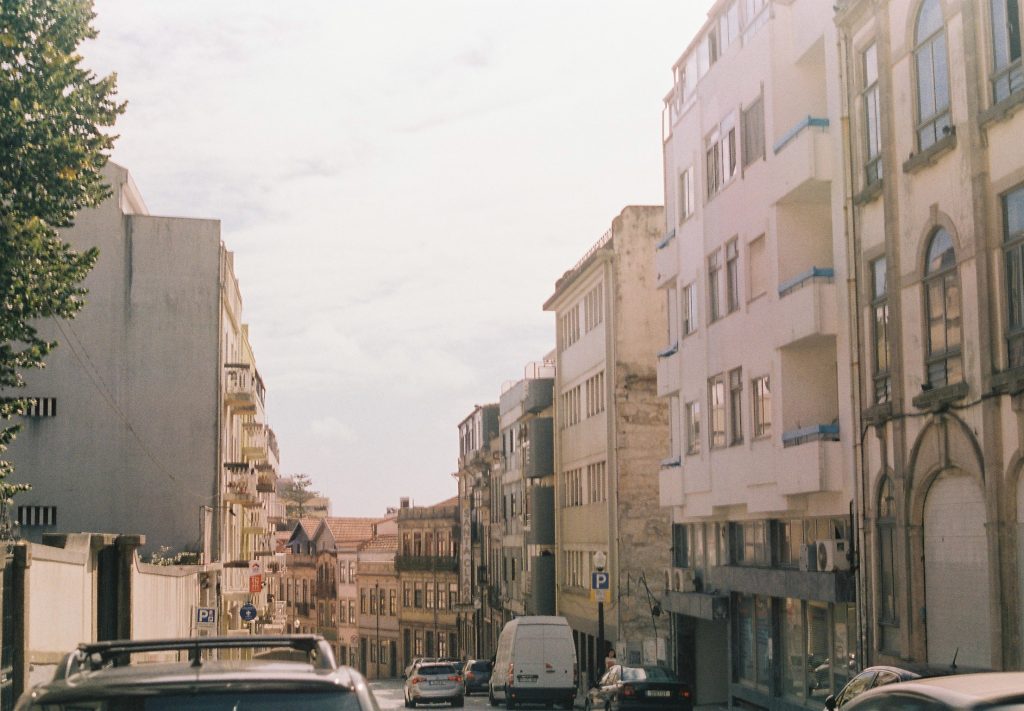
Rear Window: A Film Built on Lines and Distance
Alfred Hitchcock’s Rear Window (1954) is a film where the world is divided by window frames—each frame a small universe, each line a boundary between watcher and watched.
That observer’s perspective stayed with me long after the film ended.
The quiet distance between watcher and watched
Do you know your neighbour well enough?
The film builds its tension through distance. The main character Jeff watches his neighbours; we watch Jeff. Every window becomes a stage, every gesture a clue, every silence a kind of confession.
It is interesting because in the same building, everyone has a different life, different routines, different stories.
Rear Window camera: What camera does Jeff use?
Jeff, a journalist recovering from an injury, spends his days confined to his apartment. The space is small, but the view is wide—an accidental stage where every neighbor becomes part of an unfolding play.
Throughout the film, Jeff holds a 1950s Exakta VX, made by Ihagee in Dresden, then part of Soviet‑occupied East Germany. It’s a camera with weight—not just physically, but narratively.
A tool that turns distance into intimacy.
Exakta VX camera: where to find one today
I found a few second‑hand listings similar to the Exakta VX Jeff holds in Rear Window.
Ebay :https://www.ebay.com/itm/205373710409
Etsy :https://www.etsy.com/listing/4497883714/exakta-vx-35mm-camera-with-schneider
However, some come without lenses, some are sold AS‑IS (not tested, not guaranteed to work). But for anyone who enjoys vintage objects, or simply wants a piece of cinematic history on their shelf, they’re beautiful artifacts that works too!
Hitchcock objects: the small things that shape the film’s mood- that I really like!
Hitchcock’s humor is subtle—almost invisible unless you lean in.
He appears briefly in the pianist’s apartment, listening to the melody like a neighbour passing by.
And other small details build the emotional temperature of the film—quiet, domestic, slightly surreal:
- The quiet, stubborn weight of the Exakta VX the massive Kilfitt Fern-Kilar f/5.6 400mm telephoto lens that Jeff held.
- The older lady helper making bacon and eggs breakfast for Jeff.
- Lisa’s fashionable outfits shifting with each scene; her lobster dinner arriving on a breakfast tray, adding a touch of casual luxury to a small apartment.
- The neighbour across the street, a dog lowered into the courtyard in a basket, twice a day, like clockwork.
- Somewhere below, a pianist circling the same unfinished melody — and Hitchcock himself appearing briefly, enjoying it too.
- The cold shine of the binoculars.
- The single lady across the street rehearsing a dinner she wishes she weren’t eating alone.
- Lady’s handbag and jewelery.
- The social‑butterfly girl dancing day and night with friends.
- The older lady sculpting quietly in her apartment.
In Rear Window, is the camera a window, or is the window a camera?
The most impressive part of the film for me is the space Hitchcock uses — or doesn’t use.
The sneaky, angled views into different neighbours’ lives across the courtyard feel strangely familiar.
Like living in a dense city, where apartments are close yet lives remain distant.
I like the way Hitchcock designs the film’s atmosphere: nervous, curious, yet glamorous.
And the cute moments he hides in plain sight are all perfectly timed.
I remember hearing somewhere that Hitchcock used to appear in many of his films, but audiences became so focused on spotting him that it distracted them from the story.
So eventually, he decided to remove himself from some scenes. 😂
I’ll be exploring more of Hitchcock’s films soon, especially the ones that hide their humor and tension in everyday objects.
Stay tuned if you’d like to keep looking through these cinematic windows with me.